Make every drop count, even with weak water flow.
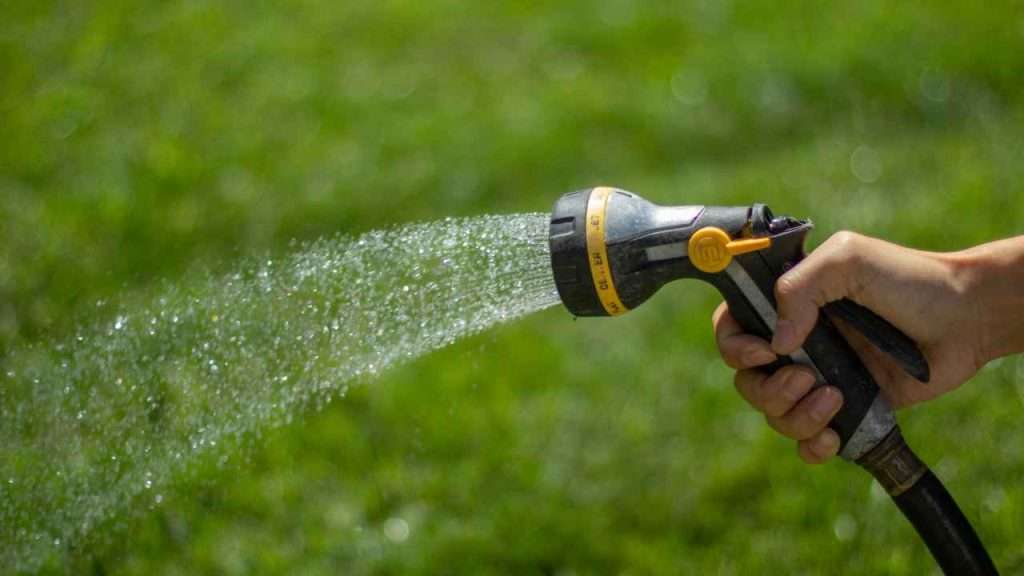
Low water pressure can be a real pain when you’re trying to water your plants or clean the patio. Whether you’re in an older home or just have a weak outdoor tap, it doesn’t mean you’re stuck with a sad trickle.
The right hose and nozzle combo can make a world of difference, even with low pressure. Let’s look at what actually works.
Table of Contents
Before we begin, here are our top garden hose choices for low water pressure:
Don’t Blame the Hose for Everything
In most gardens, the hose is connected to a tap just outside the house. So, the pressure coming out of that tap is fixed; it’s not something the hose can increase. But the wrong hose can make things worse. Think heavy, stiff hoses that kink or ones that leak at every joint.
The goal is to pick a hose that makes the most of the pressure you have. And don’t worry, we have a solution for your low water pressure problem!
Does Hose Diameter Affect Pressure?
A narrower hose will feel like it has more pressure, but that doesn’t mean more water is coming out. A wider hose moves more water, but with less force if your pressure is already low.
So, while 3/4″ hoses might be great for high-flow systems, in a low-pressure situation, a thinner hose (like 1/2″) might feel stronger at the spray head, but this alone isn’t enough.
Why Expandable Hoses Are a Game-Changer
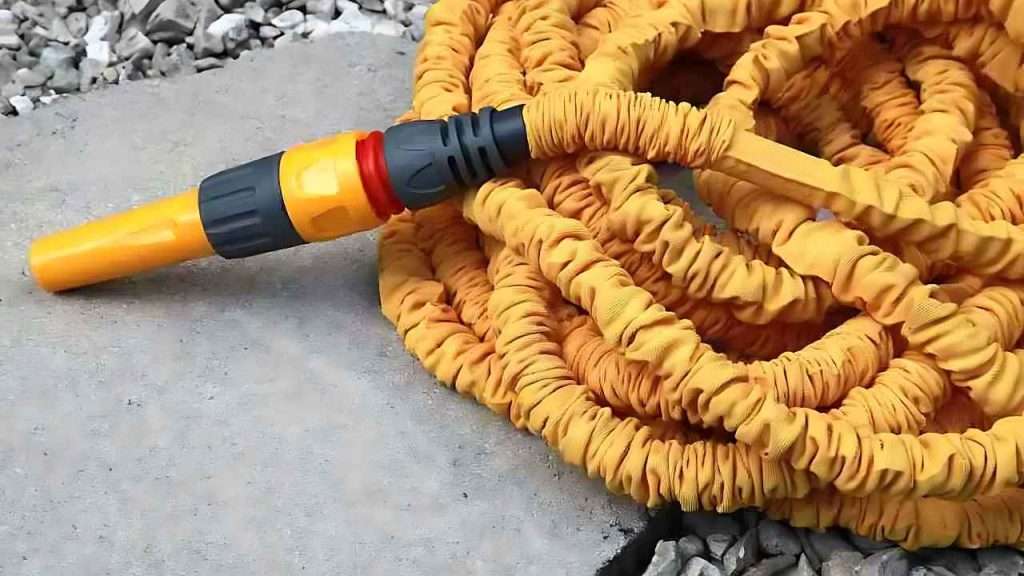
If you’re dealing with low water pressure, expandable hoses are your best friend. Here’s why:
They Fill Up and Expand
When you turn on the tap, an expandable hose starts off compact and lightweight. But as water flows in, the inner tube fills and the hose begins to stretch, usually up to 3x its original length.
This process builds up pressure within the hose itself, even if the water coming from the tap is weak. By the time the hose is fully expanded, you’ve got a long, fully pressurized line that can deliver much more force than you’d expect.
Their Natural Elasticity Helps “Push” the Water Out When You Squeeze the Trigger
This is the real secret sauce. The inner latex or TPC core acts almost like a balloon. As it expands, it stores energy.
When you squeeze the trigger on your spray nozzle, the tension in the stretched hose helps force the water out.
It’s not magic, it’s simple physics: the elastic walls of the hose add extra push to the flow, especially noticeable if you’re using a nozzle with good control. This added resistance creates a feeling of stronger pressure, even if the source is weak.
They’re Lightweight, Easy to Move, and Never Kink
Traditional hoses, especially heavy-duty rubber ones, can weigh a lot, and they’re often hard to drag around the garden. Worse, they kink, and kinks kill whatever little pressure you’ve got left.
Expandable hoses, on the other hand, are super light, easy to coil up when empty, and naturally resistant to kinks because of their flexible outer shell. Even better, if you do accidentally fold one over, the water still tends to push its way through, or it straightens out on its own.
An expandable hose is only half the equation. Add a trigger-style spray nozzle with multiple settings, like jet, shower, mist, etc., and you’ll get all the control you need. The combo of an expanding hose + focused spray pattern gives much stronger water flow.
You can actually get work done, watering, cleaning, rinsing, without struggling with dribbles.
Best Garden Hoses for Low Water Pressure
Here are some solid options that work well in low-pressure situations.
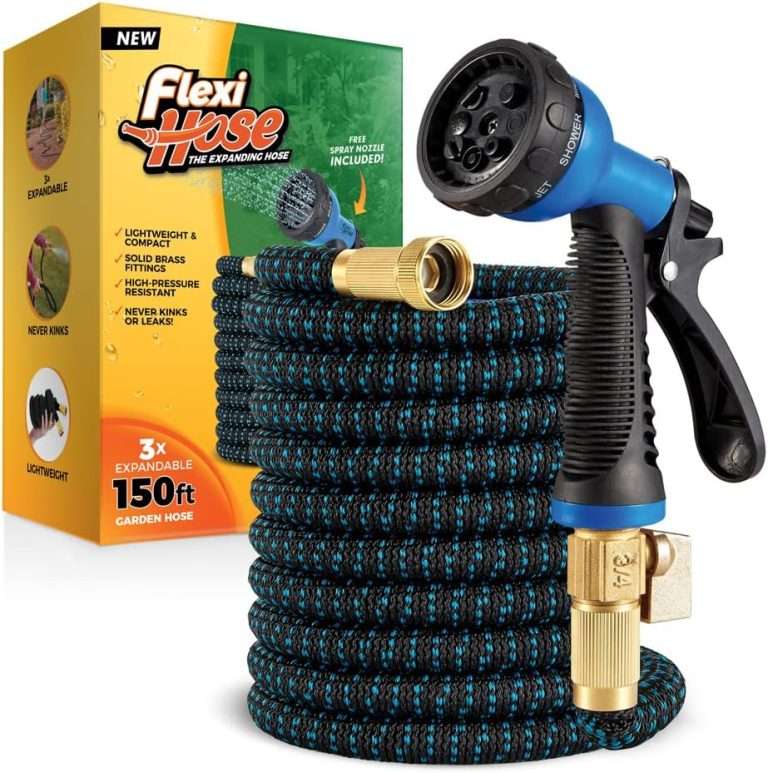
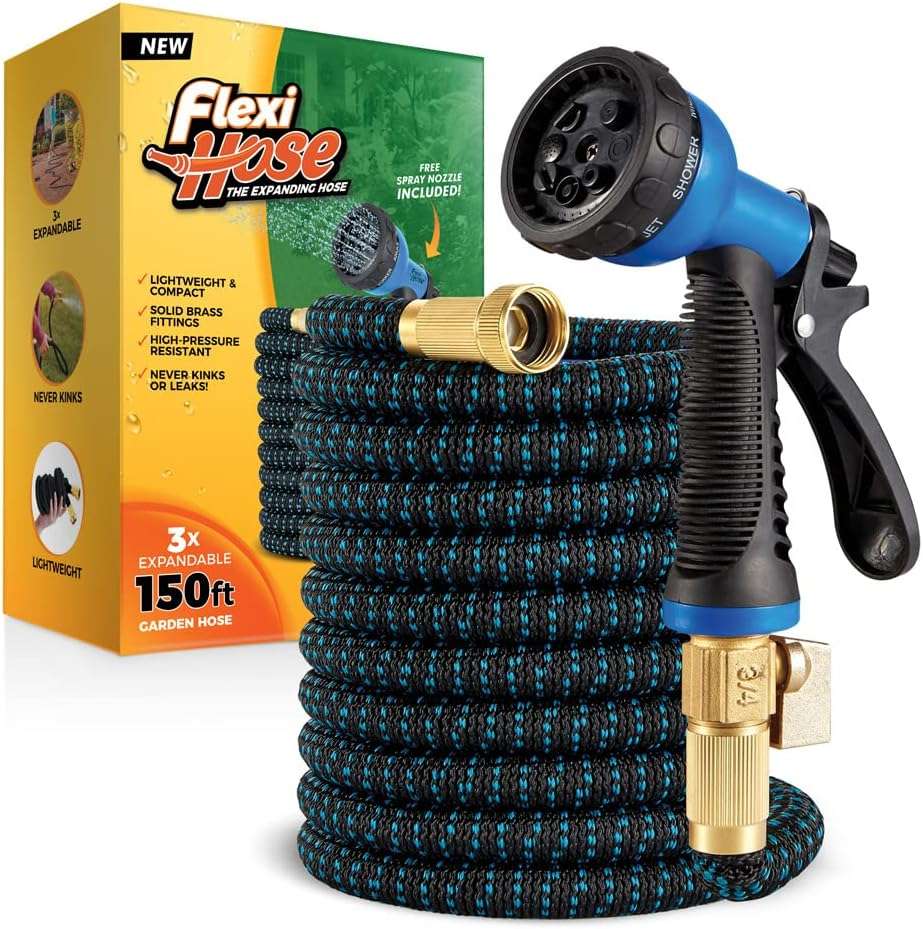
1. Flexi Hose Expandable 150 ft with 8-Function Nozzle
Technical specifications
- Hose Length: 150 ft (45.7 m),
- Material: 3750D outer fabric, double latex core,
- Connector Size: 3/4 inch solid brass fittings,
- Spray Nozzle: 8 spray patterns,
- Weight: 6.6 lb (3 kg).
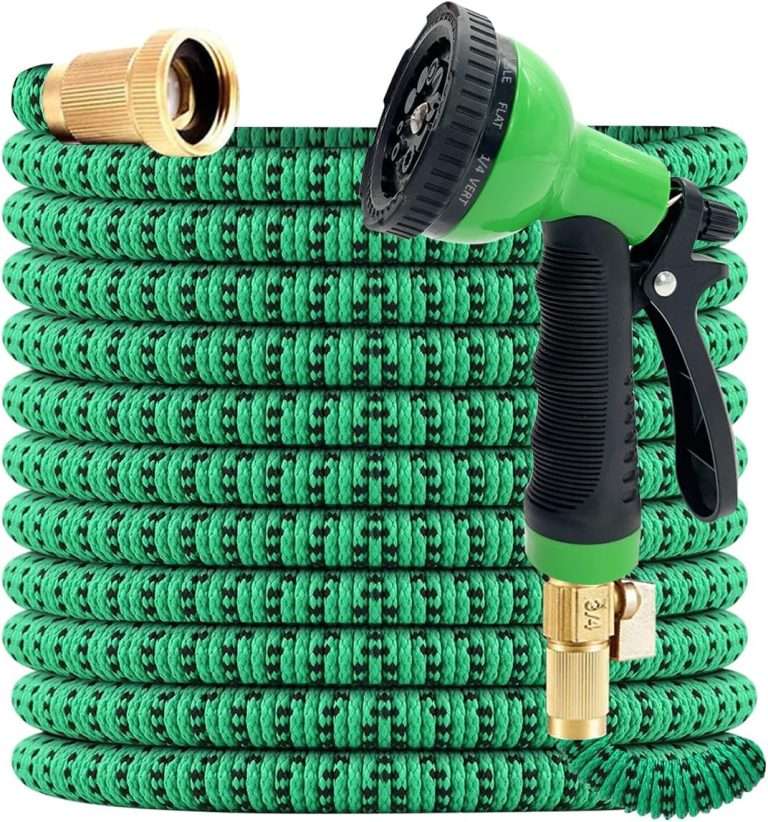
For gardeners struggling with low water pressure, the Flexi Hose is a perfect choice. It’s an expandable hose that stretches up to 150 feet when water flows through it and contracts back to a small, manageable size when you turn the tap off.
The lightweight design makes it easy to move around, and its natural expansion helps boost the pressure when watering.
The solid 3/4 inch brass fittings are a good touch for reducing leaks, and the double latex core inside is built to handle normal outdoor bumps like thorns and sharp edges.
The included 8-function spray nozzle gives you control over the water flow, letting you adjust from a strong jet to a gentle mist depending on what you’re watering.
Overall, if you’re looking for a lightweight, easy-to-store hose that works well even with lower pressure, this is a strong option to consider.
Pros
- Expands easily and contracts for simple storage,
- Lightweight and flexible, even when fully extended,
- Strong brass fittings help reduce leaks,
- 8-pattern spray nozzle included,
- Good pressure boost effect for low-pressure taps.
Cons
- A bit expensive compared to shorter basic hoses.
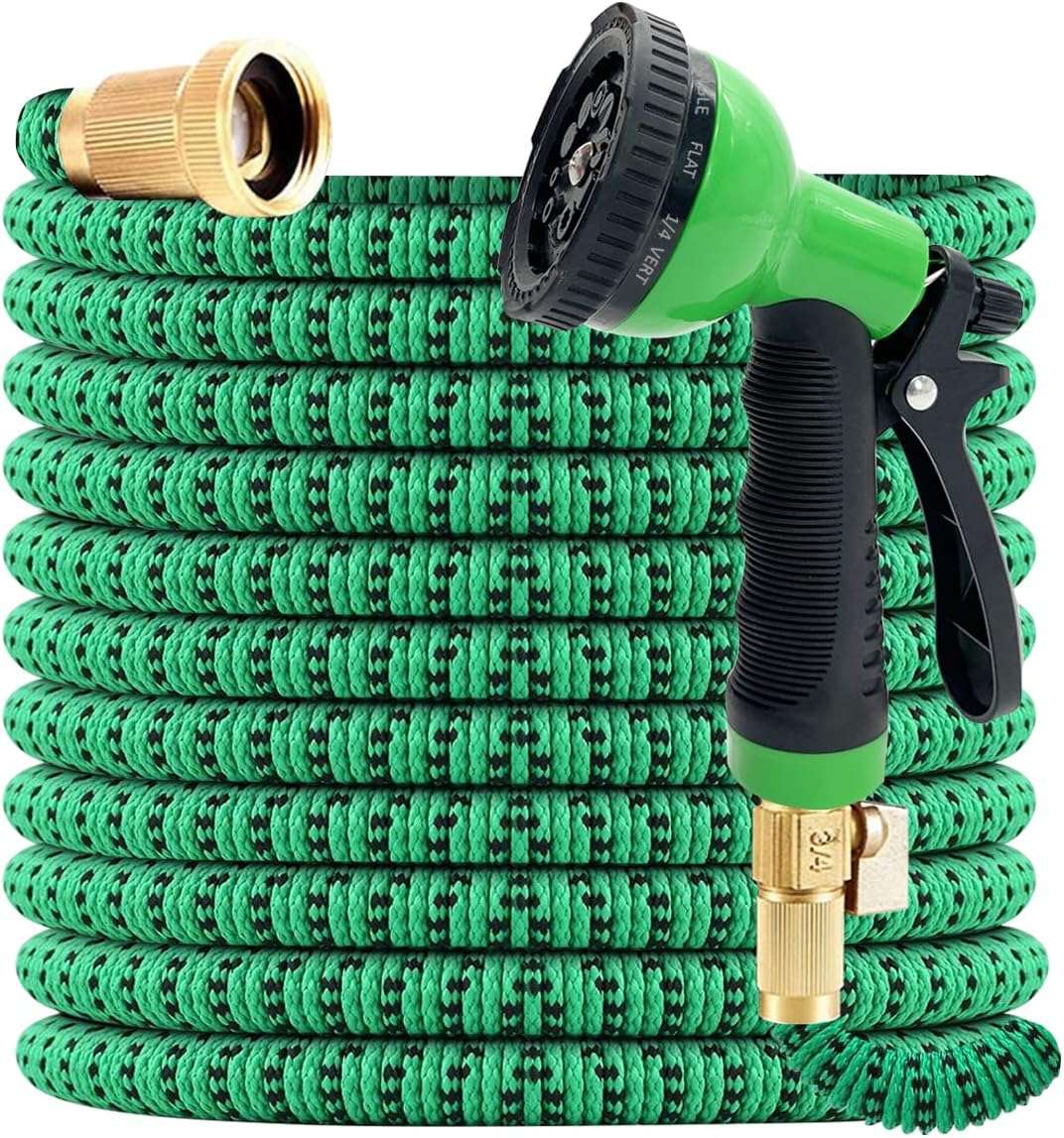
2. J&B XpandaHose 50 ft Expandable Garden Hose
Technical specifications
- Hose Length: 50 ft (15.2 m),
- Material: 3750D outer fabric, four-layer latex core,
- Connector Size: 3/4 inch solid brass fittings,
- Spray Nozzle: 10 adjustable patterns included,
- Weight: Under 3.5 lb (1.6 kg).
The J&B XpandaHose is a lightweight and durable expandable hose designed to tackle a variety of outdoor tasks.
Built with a four-layer latex core and strong 3750D fabric, the hose resists leaks and handles high temperatures. Solid brass fittings with a sturdy on/off valve help ensure a tight, leak-free connection.
The hose comes with a 10-pattern spray nozzle, offering flexibility for watering plants, washing cars, or cleaning patios. It expands under pressure and contracts neatly for easy storage, and it includes a storage bag and holder for added convenience.
A lifetime warranty is included, providing extra peace of mind.
Overall, the J&B XpandaHose is a great choice for gardeners who want a lightweight, flexible hose with extra durability and reliable performance under low water pressure.
Pros
- Strong four-layer latex core for better durability,
- Lightweight and easy to move around,
- Solid brass connectors resist leaks and corrosion,
- 10-pattern spray nozzle included,
- Backed by a lifetime warranty.
Cons
- Shorter hose length may not suit larger gardens.
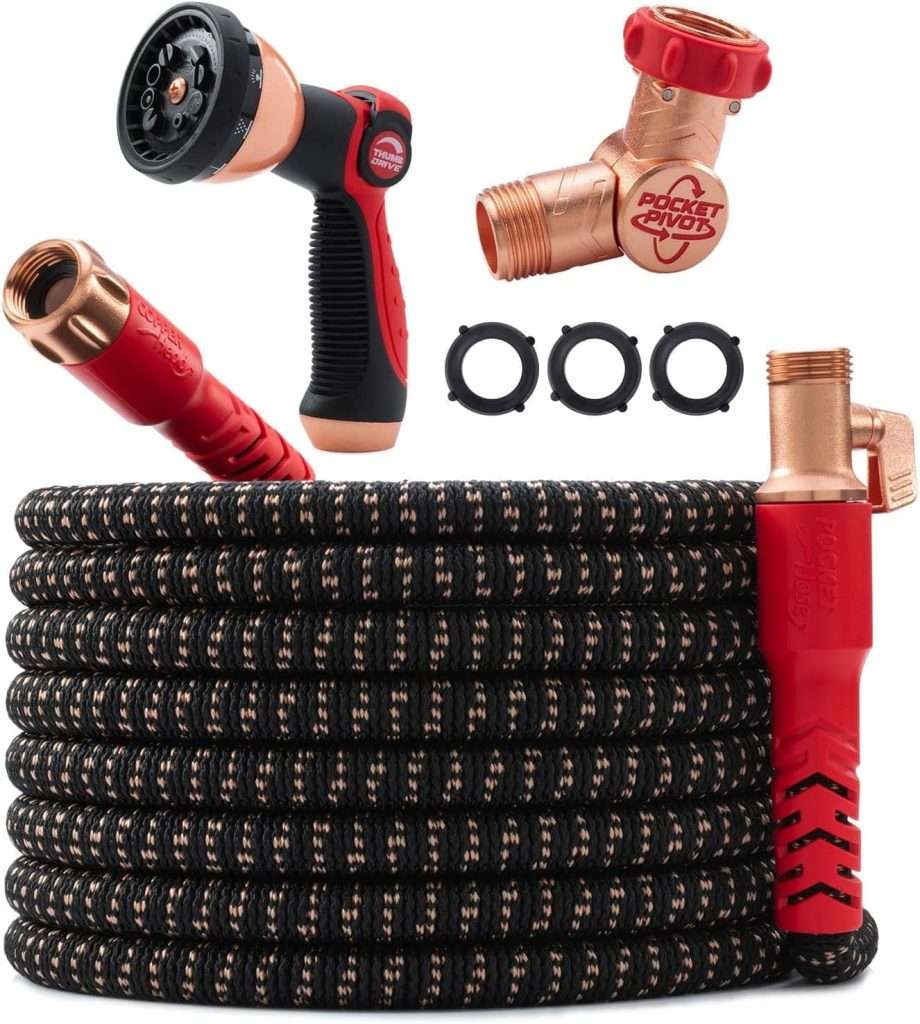
3. Pocket Hose 100 ft Expandable Garden Hose
Technical specifications
- Hose Length: 100 ft (30.5 m),
- Material: Force Field Jacket with Tri-Tex latex tubing,
- Connector Size: 3/4 inch,
- Spray Nozzle: 10 spray patterns included,
- Weight: 5.8 lb (2.6 kg),
- Special Feature: 180°-360° Pivot at the spigot
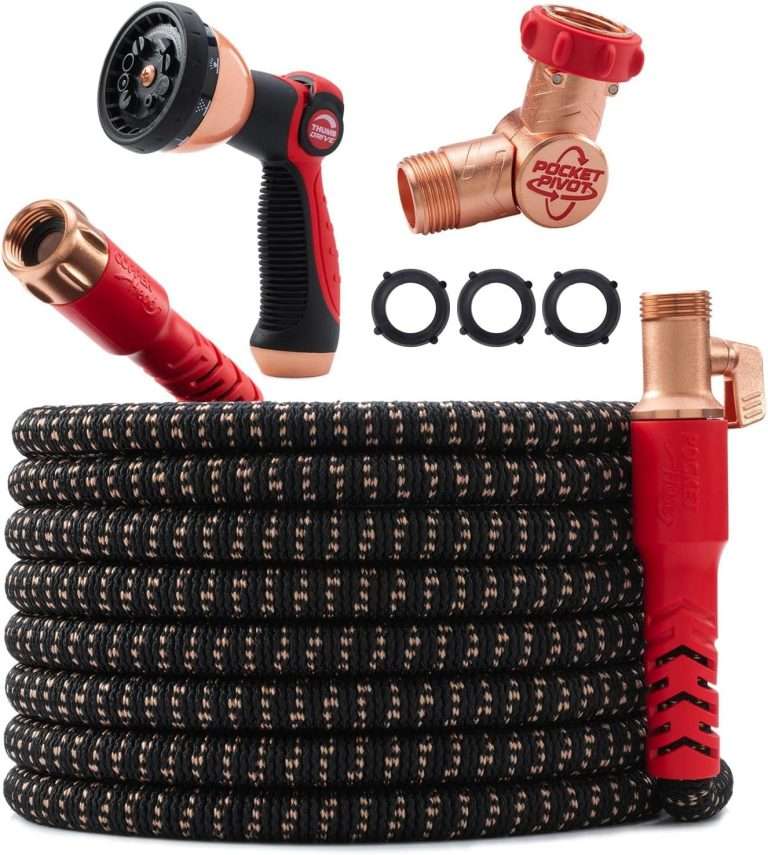
The Pocket Hose Copper Head 100 FT is a strong, flexible option for gardeners looking for better durability in an expandable hose.
This model includes the innovative Pocket Pivot, allowing the hose to swivel 360° at the spigot to prevent kinking and reduce strain. It’s protected by the tough Force Field Jacket and reinforced with Tri-Tex triple-layer tubing, providing strength against wear and tear.
It’s also lead-free and safe for drinking water, thanks to copper-infused materials. Weighing less than six pounds, it’s easy to move around larger gardens without feeling heavy or awkward.
The included 10-pattern spray nozzle adds versatility for different tasks.
Overall, it’s a good fit for gardeners needing a balance between lightweight convenience and extra strength.
Pros
- Swivel pivot reduces strain and prevents kinks,
- Durable Force Field Jacket and Tri-Tex tubing,
- Safe for drinking water, plants, and pets,
- Lightweight and easy to store,
- 10-pattern spray nozzle included.
Cons
- Cost more than basic garden hose models.
Best Garden Hose for Low Water Pressure

Don’t Forget the Nozzle
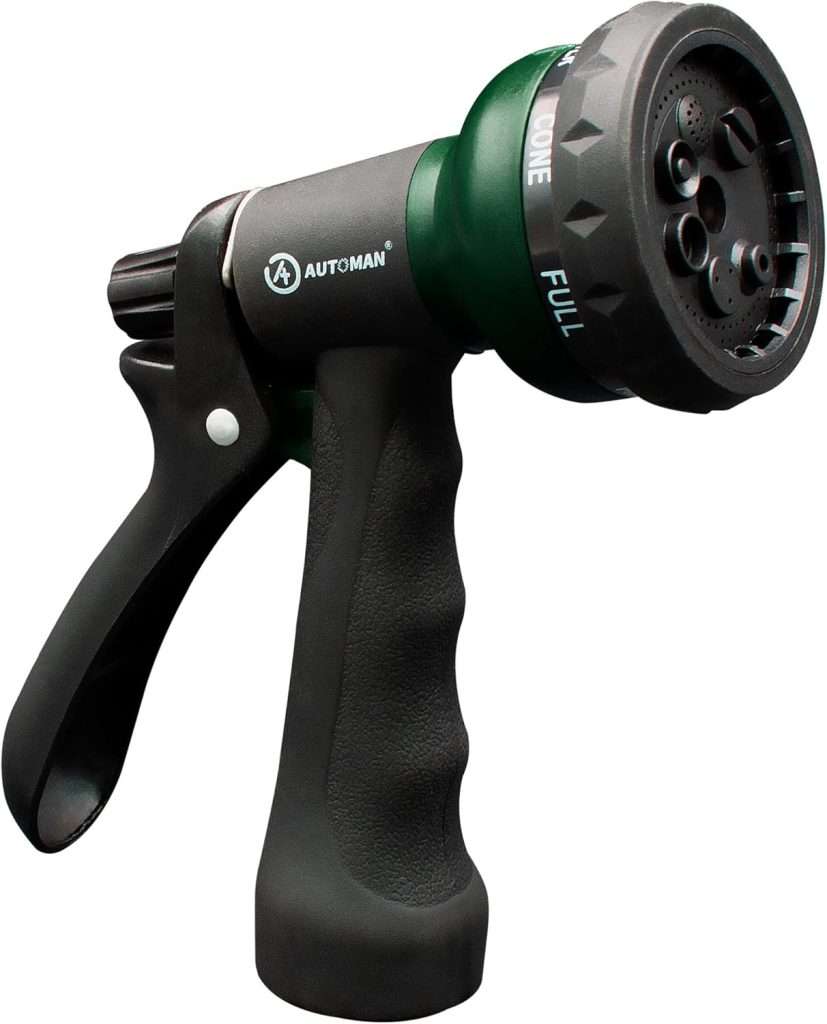
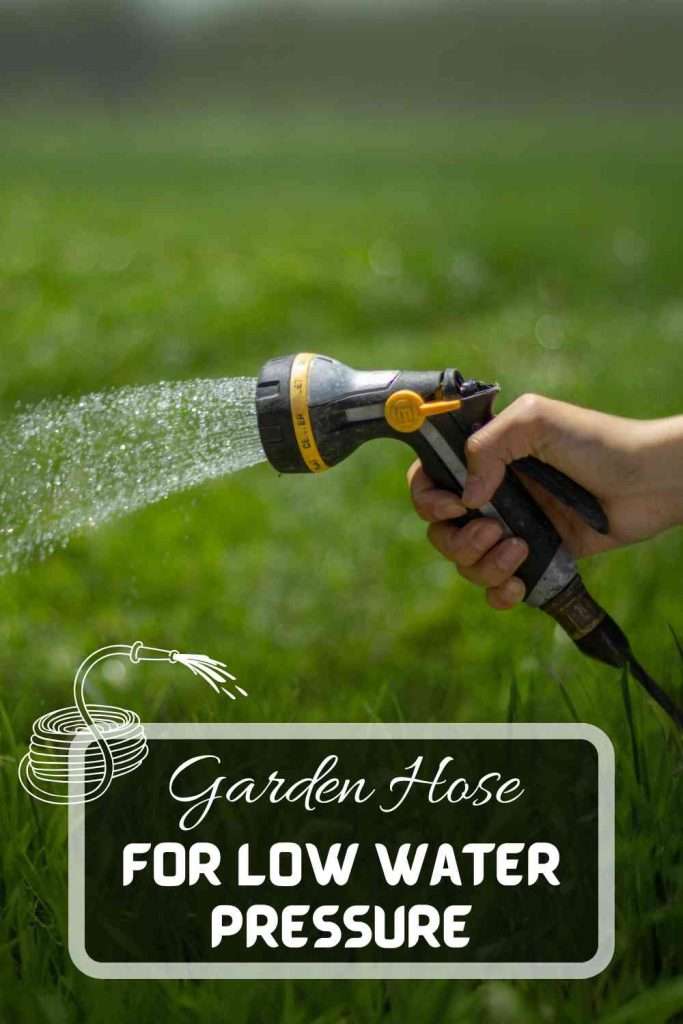
A high-quality spray nozzle or trigger head makes all the difference. Look for one with:
- Multiple spray patterns (mist, shower, jet, etc.),
- A good grip (especially when wet),
- A trigger lock if you need to hold it down for a while.
This lets you focus your water where it matters, even if there’s not a lot to work with.
Real Tips to Get the Most from Your Expandable Hose
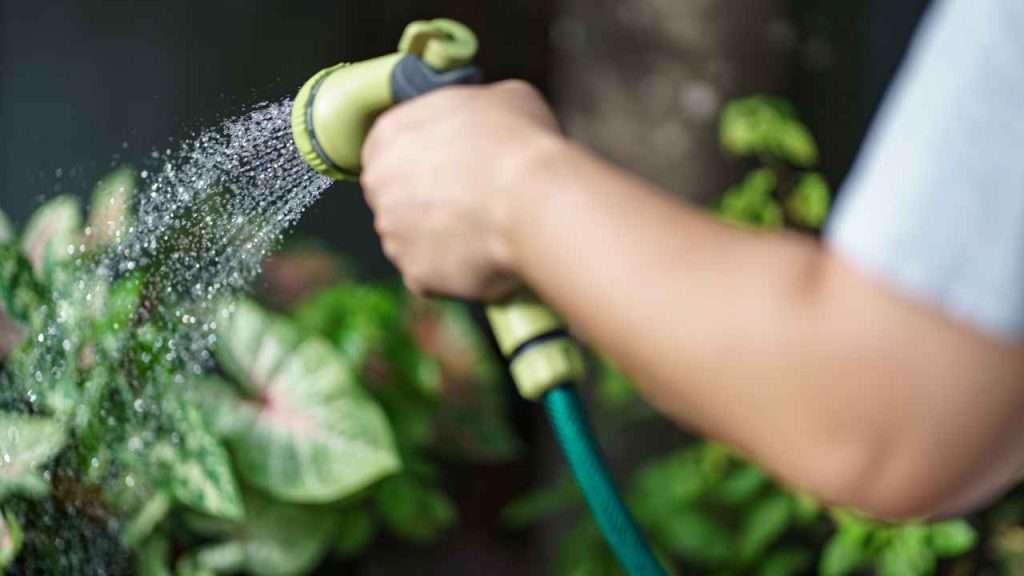
Expandable hoses work differently from traditional hoses, especially under low pressure. Here’s how to get the best performance out of them:
1. Let the Hose Fully Expand Before Use
When you turn on the tap, give the hose a moment to expand fully before using the spray nozzle. The water needs to fill the inner tube and stretch it out.
That internal pressure is what gives you the extra push when you start watering. If you use it too soon, you’ll get weak flow.
2. Use a Longer Hose if You Have Space
With expandable hoses, longer doesn’t mean weaker. In fact, the extra length gives more room for water buildup inside, which helps increase the internal pressure.
It also keeps the pressure feeling steady for longer bursts of use.
3. Keep Connections Tight and Well-Fitted
Leaks, especially near the tap or spray head, will instantly reduce your flow. Use brass connectors or rubber washers and make sure everything is sealed tight.
Even a small drip can cancel out the hose’s internal pressure advantage.
4. Pair It With a Good Spray Nozzle
A high-quality spray head with adjustable settings and a solid trigger is key. Look for ones that let you concentrate the flow, switch to jet mode, or mist plants gently, all while maintaining good water control.
5. Give It a Moment to Refill Between Uses
Because water comes in at low pressure and goes out at higher pressure, the hose will sometimes empty out if you spray for a while. That’s totally normal.
Just pause for a few seconds, sit down, and let the hose fill up again. You’ll feel it tighten and expand quickly, and you’re back in business.
6. Store It Properly Between Uses
Expandable hoses are flexible, but they don’t like being neglected. After use, turn off the water, let it shrink down, and store it away from direct sunlight.
This keeps the inner material from wearing out or getting brittle.
Final Thoughts
You don’t need a fancy pump system to deal with low water pressure. With an expandable hose and a decent spray head, you can make your weak tap feel strong again.
Lightweight, easy to use, and pressure-friendly, that’s the combo that works.
Hopefully, you got the answer to how to choose a garden hose for low water pressure. If you enjoyed reading our article, check out other similar articles in our “Garden Tools” section.
Want to share your thoughts, or have you read something you disagree with? Send us an email! We would love to discuss it 🙂